
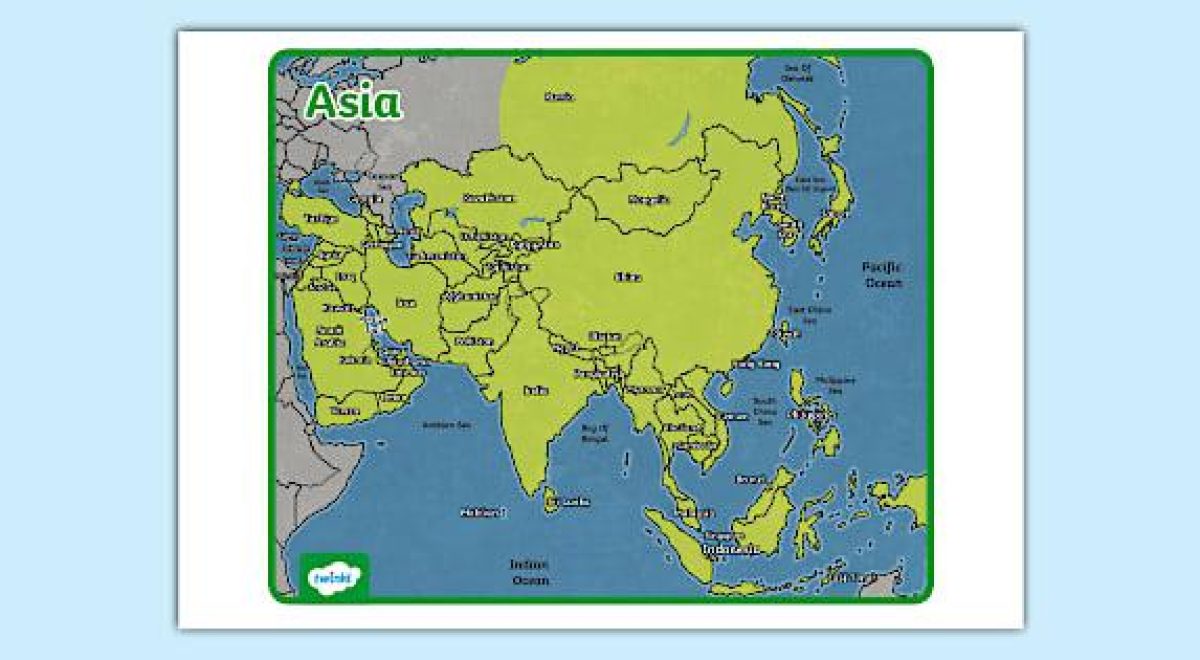
Asia The Largest and Most Diverse Continent.
1. Introduction to Asia
Asia is the largest continent on Earth in both land area and population. It covers approximately 44.5 million square kilometers and is home to a remarkable variety of cultures, languages, religions, landscapes, and economies. Asia plays a central role in global affairs and has been the birthplace of many ancient civilizations.
2. Location and Boundaries
Asia is located primarily in the Eastern and Northern Hemispheres. It is bordered by Europe to the west, Africa to the southwest, the Arctic Ocean to the north, the Pacific Ocean to the east, and the Indian Ocean to the south. Its strategic location has made it a center of trade and cultural exchange for centuries.
3. Total Population
Asia is the most populous continent, with more than 4.8 billion people. This represents nearly 60% of the world’s population. The continent contains some of the most densely populated regions on Earth, especially in South and East Asia.
4. Number of Countries
Asia consists of approximately 49 internationally recognized countries. These nations vary greatly in size, population, economic strength, and political systems. Some countries cover vast territories, while others are small island nations.
5. Largest Countries by Area
The largest countries in Asia include China, India, Kazakhstan, and Saudi Arabia. These nations occupy significant portions of the continent and possess diverse natural resources.
6. Most Populous Nations
Asia contains the world’s two most populous countries: India and China. Together, they account for more than one-third of the global population and have a major influence on world economics and culture.
7. Economic Importance
Asia is the driving force behind much of the global economy. Many countries have experienced rapid industrial growth, technological advancement, and increased international trade. The continent contributes a substantial share of global GDP.
8. Major Economic Powers
Countries such as China, Japan, India, and South Korea are among the world’s leading economies. They are known for manufacturing, technology, finance, innovation, and exports.
9. Technology and Innovation
Asia is recognized as a global leader in technology. Many groundbreaking innovations in electronics, robotics, artificial intelligence, and telecommunications originate from Asian countries, particularly Japan, South Korea, China, and Singapore.
10. Natural Resources
The continent possesses abundant natural resources, including oil, natural gas, coal, minerals, forests, and fertile agricultural land. These resources contribute significantly to economic development and international trade.
11. Agriculture and Food Production
Agriculture remains a vital sector in many Asian countries. Rice, wheat, tea, spices, fruits, and vegetables are produced on a massive scale. Asia supplies a large percentage of the world’s food products.
12. Cultural Diversity
Asia is home to thousands of ethnic groups and cultures. Traditions, customs, clothing styles, music, and art forms vary widely across regions, making the continent one of the most culturally diverse places on Earth.
13. Languages of Asia
Thousands of languages are spoken throughout Asia. Major languages include Mandarin Chinese, Hindi, Arabic, Bengali, Japanese, Korean, Turkish, and Russian. This linguistic diversity reflects the continent’s rich historical development.
14. Birthplace of Major Religions
Asia is the birthplace of several major world religions, including Buddhism, Hinduism, Islam, Christianity, Sikhism, and Judaism. These faiths have shaped the beliefs and cultures of billions of people worldwide.
15. Climate and Weather
Asia experiences almost every major climate type, from Arctic conditions in the north to tropical climates near the equator. Deserts, monsoon regions, forests, and mountain climates all exist within the continent.
16. Famous Rivers
Some of the world’s most important rivers flow through Asia, including the Yangtze River, Ganges River, Mekong River, and Tigris and Euphrates Rivers. These rivers support agriculture, transportation, and human settlements.
17. Mountain Ranges
Asia contains the world’s highest mountains, including the Mount Everest in the Himalayas. These mountains influence weather patterns and provide important water resources.
18. Major Cities
The continent is home to many global cities, including Tokyo, Beijing, Seoul, Mumbai, and Dubai. These cities are major centers of commerce, culture, and innovation.
19. Tourism and Landmarks
Asia attracts millions of tourists every year. Famous attractions include the Great Wall of China, Taj Mahal, Burj Khalifa, and many historic temples, palaces, and natural wonders.
20. What Asia Is Famous For
Asia is famous for its ancient civilizations, technological innovation, economic growth, cultural heritage, religious significance, diverse cuisines, and natural wonders. It is widely regarded as one of the most influential regions in the world.
21. Future Prospects
Asia is expected to remain a key driver of global development throughout the 21st century. With its large population, expanding economies, technological advancements, and growing international influence, the continent will continue shaping the future of the world in many important ways.
Asia Diversity, Population, & the Global Economy